
Floor Tile Installation
Level subfloors, precise layouts, and clean cuts at every border — floor tile that stays flat and looks right for years.
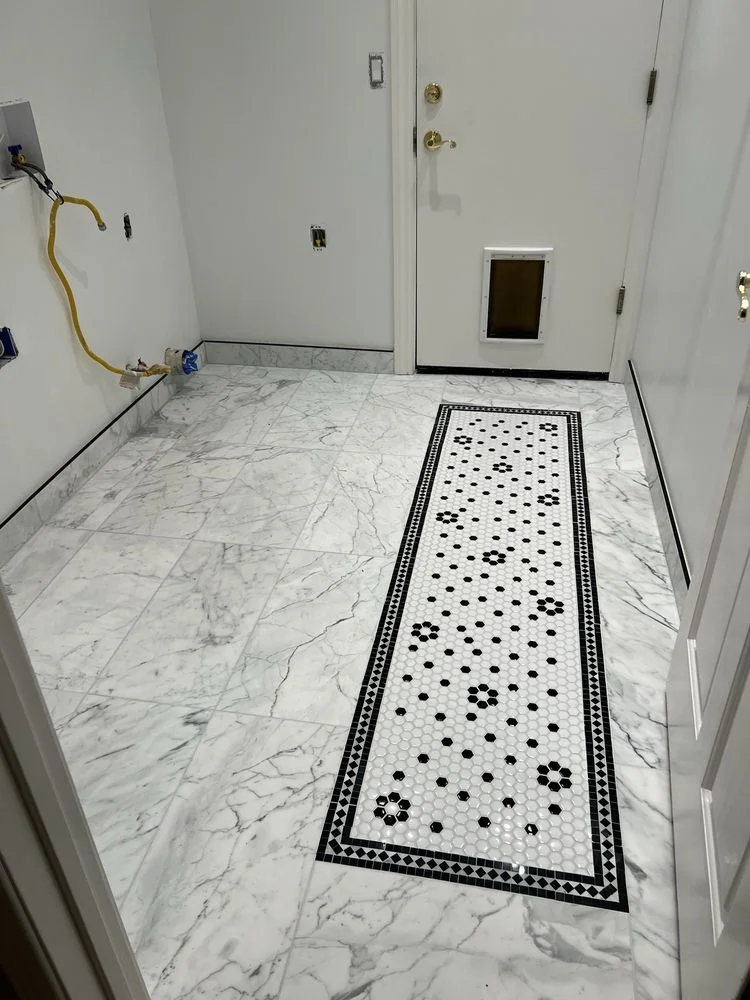
The Foundation Matters More Than the Tile
A floor tile job lives or dies by what happens before the tile goes down. Sacramento-area homes — especially the post-war tract housing common in Del Paso Heights and North Sacramento — often have older wooden subfloors that have settled unevenly over decades. A floor that's out of flat by more than 1/8 inch over 10 feet will crack grout lines and eventually crack tile, no matter how good the tile is.
We check flatness with a 10-foot straightedge before anything else. Low spots get filled with self-leveling compound; high spots get ground or planed down. Only when the substrate is within tolerance do we move to layout.
Layout Is a Design Decision
Where you start the first tile determines where the cut tiles land at every wall. A room that looks symmetrical from the doorway — equal-width cuts on both sides — requires planning the layout from the center out, not from one wall. We dry-fit a full row before committing to thinset so you can see exactly where every cut falls. For diagonal and herringbone patterns, we account for the additional waste in the material order and the additional time in the schedule.
Spaces We Tile
Available In Our Service Areas
Floor tile installation is available in Del Paso, Sacramento, and Natomas. Natomas new construction often has concrete slab subfloors, which require different prep than the wood-frame floors common in older Del Paso and Sacramento homes — we handle both.
What's Included
- Subfloor flatness check and leveling
- Cement backer board installation (wood subfloor)
- Center-out layout planning and dry-fit
- Thinset application and tile setting
- Leveling clips on large-format tile
- Precision border and threshold cuts
- Grout installation and tooling
- Grout sealer application
- Cleanup before we leave
Floor Tile Questions
How thick should the tile be for a bathroom floor?
For residential bathroom floors, porcelain tile in the 3/8-inch (10mm) range is standard and handles typical foot traffic without issues. Thinner tile (6mm) can work but is more prone to cracking on subfloors with any flex. Natural stone tile varies more by species — marble and limestone can be brittle and benefit from a stiffer substrate. We'll flag any concerns about the tile you've chosen before setting begins.
What's the difference between a straight lay and an offset (brick) pattern?
A straight lay aligns all tile grout joints in a grid. An offset (or running bond) staggers each row by half a tile, like brickwork. Offset patterns look more casual and can hide minor substrate imperfections. However, for large-format tiles (18 inches or longer), the Tile Council of North America recommends limiting the offset to 33% rather than 50% — a 50% offset on large tile can highlight lippage and cause the tile to rock during installation.
How long before we can walk on the new tile?
Light foot traffic is possible after 24 hours, but we recommend staying off the floor for the full 24-hour thinset cure and then waiting another 24-72 hours after grouting before regular use. The grout needs time to harden before it can handle foot traffic without deforming. We'll give you a specific timeline based on the thinset and grout products used on your job.
Ready to discuss floor tile for your Sacramento-area home? Call (916) 313-2437 or request a written estimate.